
How a biscuit brand can win its market with AI
Launches that outrun the shelf, packs judged on camera, fans who out-market your campaigns: eight signals every biscuit brand faces, and how to act first.

Your biscuits are bought every day, in small shops, for a few hundred rupees, by people who rarely fill in surveys. That makes the category hard to read through research alone, and surprisingly easy to read through what people post. They film taste tests, joke about office tea, share lunch box ideas and argue about which cracker goes best with pol sambol.
This guide covers eight signals every biscuit and snack brand runs into, year after year. Each is illustrated with real examples from Sri Lanka in 2026, from one of the country’s best-known biscuit brands, with names removed. If you make biscuits, crackers, wafers or snacks, read it as a checklist for your own brand.
Your campaigns and your consumers are often talking about different things
Most brands find the same gap the first time they look: what the brand is pushing and what consumers actually post are not the same.
| What a brand often pushes | What consumers often post |
|---|---|
| A purpose campaign asking people to comment | Unprompted love for an everyday product, and how they eat it |
| A premium range, launched at an event | Honest first-taste videos, often of a rival’s product |
| A new launch, announced with a retail partner | People who heard about it from friends and cannot find it |
Example from 2026: 67% of the brand’s posts came from consumers, not from the brand or its sellers. Its own campaign posts asked followers to comment and got no replies. The fans were already doing the marketing, for free.
Eight signals to watch, and what to do about each
1. A launch spreads faster than the shelves
The best launches now spread by word of mouth before the advertising does. If distribution is not ready, that demand turns into frustration.
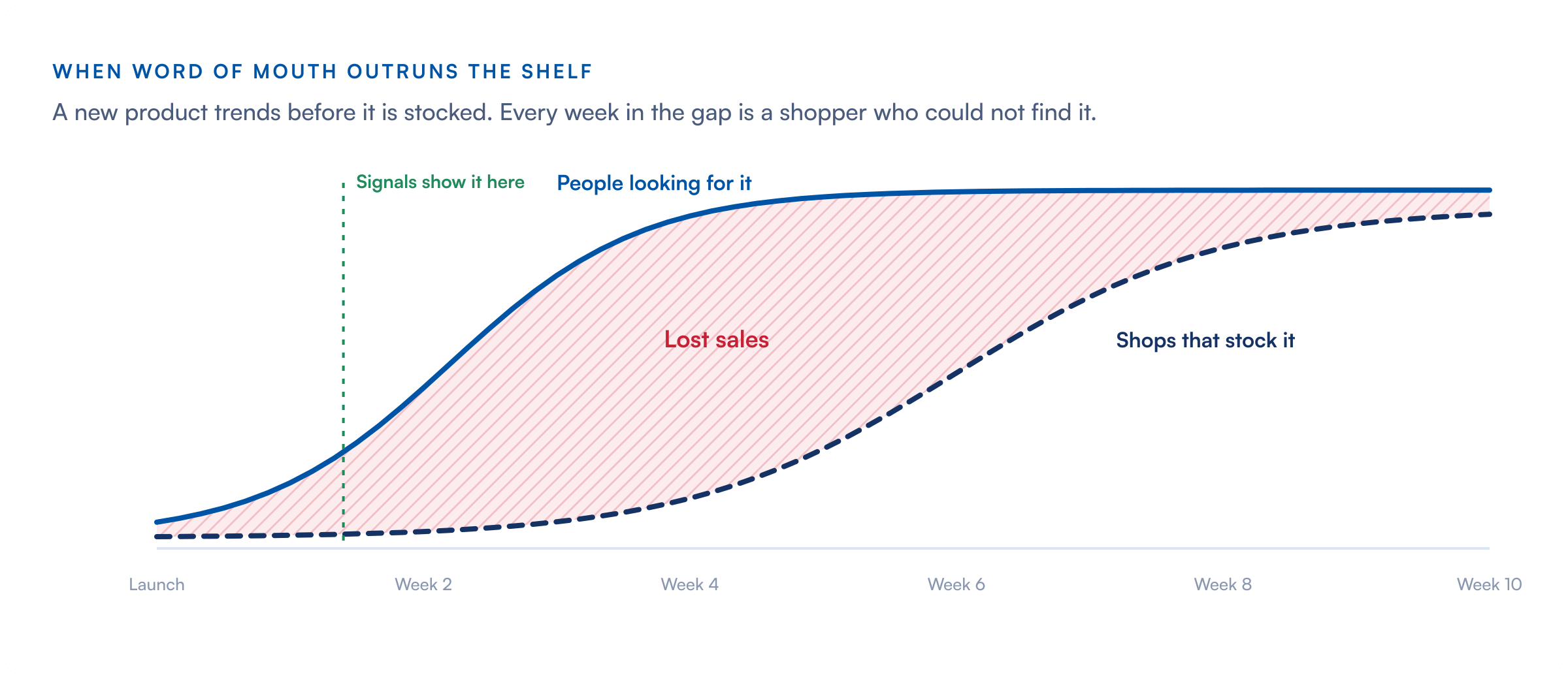
What to watch: mentions of a new product by town, and posts about not finding it. What to do: push stock and a “now in stock” sticker into small shops in the towns with the most mentions, and get new products to small shops in the first week, not only to supermarkets.
2. Value is judged on camera
Your price and pack are no longer judged privately at the shelf. They are judged publicly, on video.
Example from 2026: buyers filmed their verdicts on the new biscuit: about Rs. 180 to 190 for 10 to 11 biscuits, chocolate on only one side. A food vlogger showed visible irritation at a supermarket item going from Rs. 220 to Rs. 225. Around the world, shoppers weigh packs on camera to expose shrinkflation.
What to watch: taste-test and price videos about your products and your rivals’. What to do: put the biscuit count and weight on the front of the pack, and if costs force a change, announce it with the reason before someone discovers it.
3. Your fans may be writing your best campaign
Example from 2026: a meme account turned the global “best duo” format into a Sri Lankan series: the brand’s plain cracker with chicken curry, with pol sambol, with cheese, each video answering a follower’s suggestion. Those posts drew over 56,000 engagements. Home cooks fried crackers into cutlets. At the same time, the brand’s purpose campaign asked followers to comment about their struggles, and got no replies.
What to watch: unprompted fan formats, recipes and memes that feature your products. What to do: build on the format fans already use, credit them, and turn “please comment” campaigns into “here is what you made” campaigns.
4. A rival’s launch gets the genuine reviews
Example from 2026: the brand’s premium chocolate range drew its biggest numbers from brand-made content, including one fashion-show video with 58,138 engagements. Few people posted about it without a prize. A rival’s new chocolate biscuit, meanwhile, got ordinary people filming first tastes, naming the price and the shop.
What to watch: organic reviews of your launches versus your rivals’. What to do: give new products to ordinary reviewers before paid creators, and make gifting packs with the price on them ahead of Christmas.
5. People copy your premium products at home
Example from 2026: recipe pages published near-identical home recipes for wafer sticks in five or six flavours, describing them as cleaner, cheaper versions of the brand’s premium wafer, made in a roti pan without an oven.
What to watch: copycat recipes and “make it at home” videos for your products. What to do: treat them as a price signal, and test a smaller, cheaper pack for offices and lunch boxes.
6. Rivals tell their founder stories; do you tell yours?
Example from 2026: creators in Sinhala, Tamil and English retold a rival’s rise from a tiny tea shop to a national brand; one video passed 29,000 engagements. The brand had an equally strong story, decades of heritage and a long record in child nutrition, but it surfaced only briefly.
What to watch: whose heritage creators are telling, and what people say about your brand’s history. What to do: commission creators to tell your own story, and open your factory to school groups and parents who will film it.
7. Sharing occasions with no sharing pack
Example from 2026: office workers filmed colour-coded snack swaps with colleagues and joked about watery office tea. University students filmed Rs. 200 hostel meals and cooked in batches to share. None of these posts showed a multipack.
What to watch: everyday routines where your products could be shared. What to do: test an office tea-time box and a campus value pack sold through university canteens.
8. Exam season is lunch box season
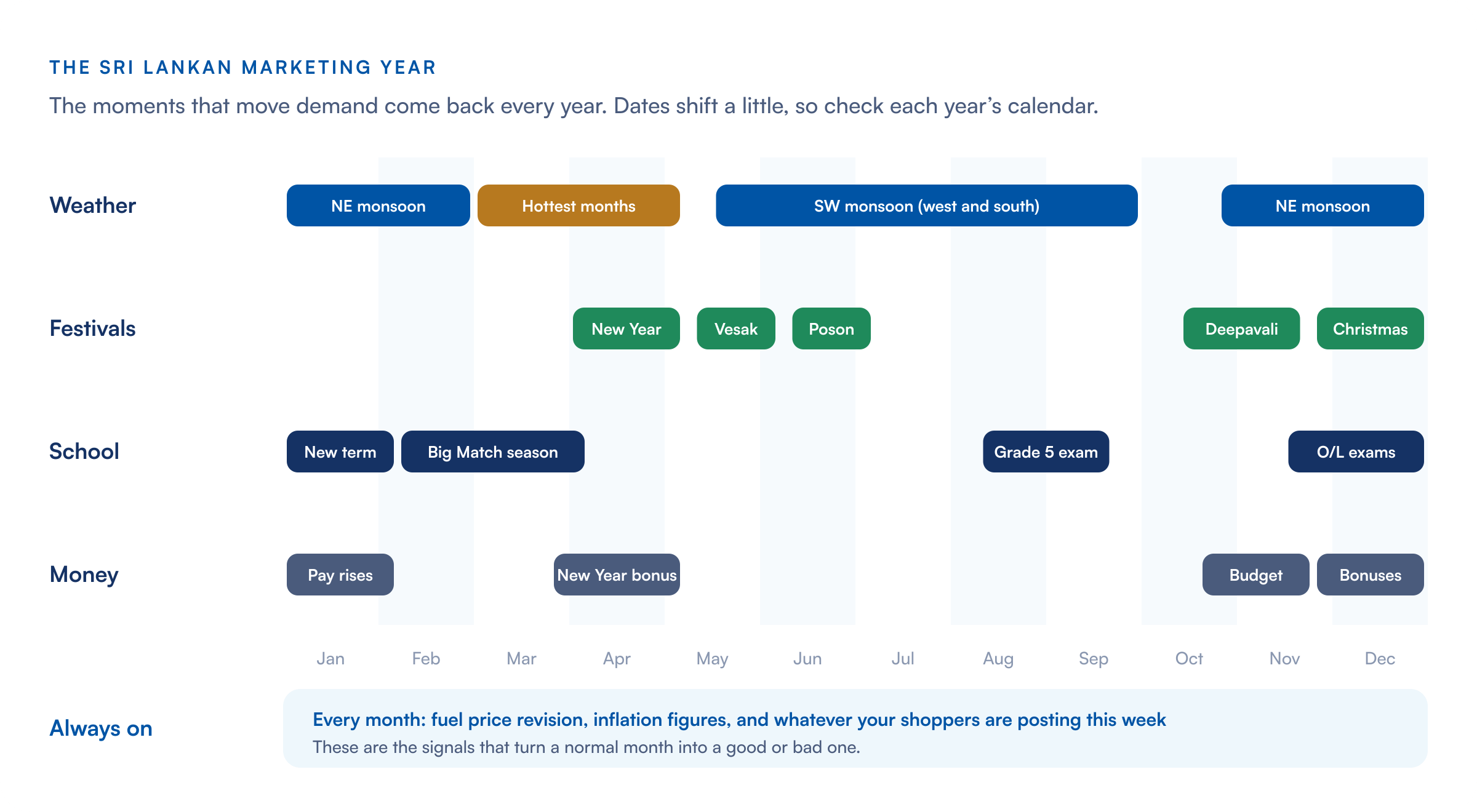
Example from 2026: with the O/L exam weeks away, parents posted lunch box ideas almost daily, and adults said children had lost outdoor play to exams. A Children’s Day campaign asking parents to value a happy child over a ranked one fitted that mood well, but it was shared mainly by broadcasters, not by parents.
What to watch: parents’ worries around exams and school terms. What to do: give parents a reason to share, such as “what is in the exam-day lunch box”, and take campaign films to school and parent pages, not only TV.
What people actually posted
Real Sri Lankan posts from 2026, translated where needed, with names and handles removed. The products will change; posts like these come back every year.
“Why didn’t you tell us you’d made such a tasty biscuit?”
A young consumer, TikTok, Sinhala (translated), 11,342 engagements
“Best Sri Lankan combo?”
A meme page, TikTok, English, 1,259 engagements
“The office tea.”
An office worker, TikTok, Sinhala (translated), 15,387 engagements
“The Rs. 200 rice packet.”
A student, TikTok, Sinhala (translated), 6,102 engagements
“Have you tried the newest doughnut? The price is too much. Remember the original price?”
A food vlogger, TikTok, Sinhala (translated), 591 engagements
“A home recipe very close to the premium wafer sticks sold under a famous biscuit brand, made without an oven, in a roti pan.”
A home cook, Facebook, Sinhala (translated), 492 engagements
The cost pressure behind every pack
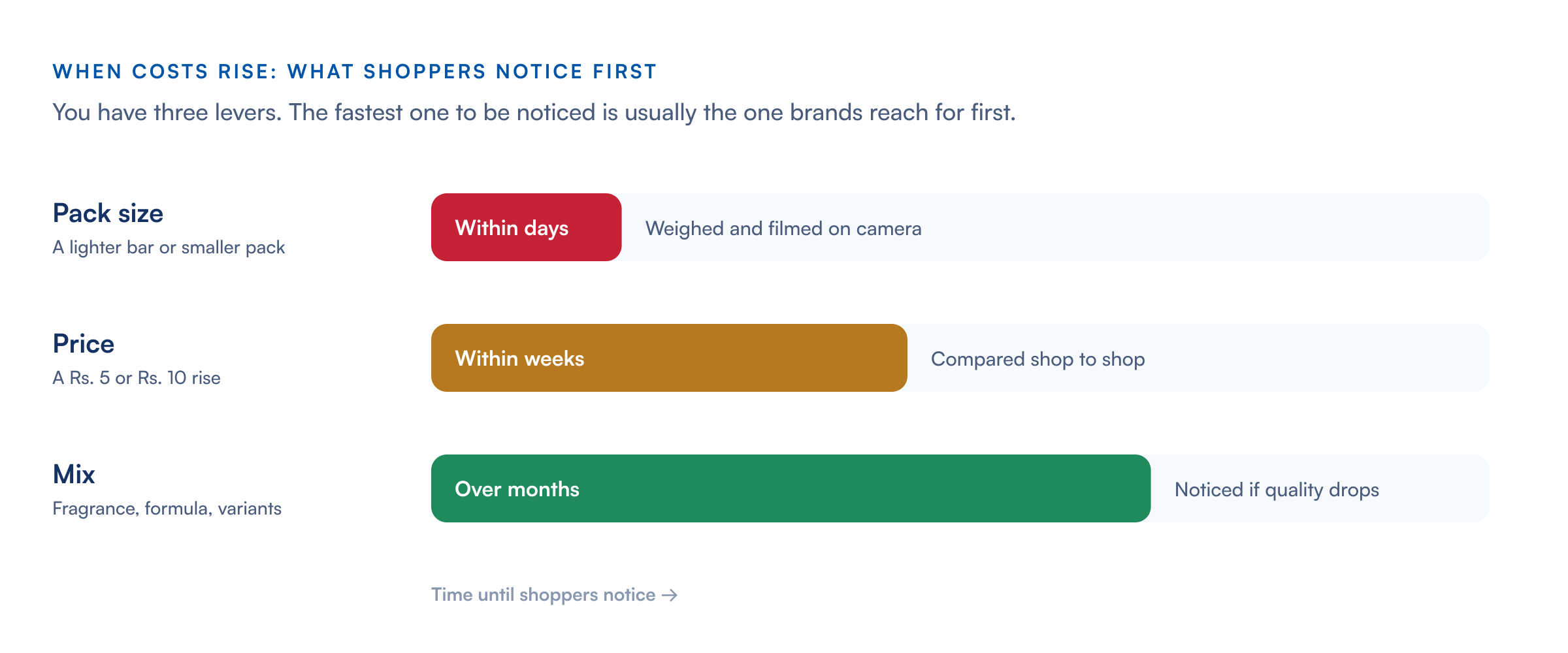
Biscuit margins depend on flour, sugar and fats, and on what shoppers will accept. When costs rise, you have three levers: price, pack size and mix. Shoppers notice them at very different speeds.
Your year at a glance
Why AI changes the job
For the brand in this guide, Forevate read 10,172 public posts in Sinhala, Tamil and English and narrowed them to 103 signals that mattered. Some of what looked Sri Lankan at first was not: drama fan clips caught by a look-alike hashtag, and shrinkflation videos from other countries. Forevate marks every signal with where its evidence comes from, so a global trend is never mistaken for a local one.
Each signal is tagged to product, price, place or promotion, linked to the posts behind it, and checked against public sources. Your team sees one picture: what consumers love, what they are hunting for, what they think costs too much, and what a rival did this week. Then you decide.
See what your shoppers are saying about your brand. Start a free 30-day pilot, with first insights in 14 days. Related: what is a market signal? and Forevate and market research.
Related resources
 Article
How a soap brand can protect its price and its shelf with AI
Shrinking packs filmed on camera, floods, small-shop stocking and festive moments: the signals that decide a soap brand's share, and how to see them first.
 Article
How an automotive importer and distributor can lead its market with AI
Rivals, dealer pricing, loan rules, fuel prices and owner pride: eight signals every vehicle distributor faces, and how AI helps you act on them first.
 Article
Forevate vs market research: a partner, not a replacement
Forevate doesn't replace market research. It reads every signal between studies, makes each study go further, and helps you commission fewer, sharper ones.