
How a soap brand can protect its price and its shelf with AI
Shrinking packs filmed on camera, floods, small-shop stocking and festive moments: the signals that decide a soap brand's share, and how to see them first.

Soap is bought by almost every household, every few weeks, mostly from the same small shop. Loyalty is real but thin. When the price of a bar moves by Rs. 10, or the bar gets lighter, shoppers notice. They switch, and increasingly they post about it.
This guide is written for bathing soap, personal wash and home care brands. The brand in its examples is illustrative, a composite of the challenges such brands face. The market signals and posts are real, taken from Sri Lankan news and social media in 2026. The patterns come back every year.
Where a soap brand wins or loses
| Lever | What tends to happen | The risk or the opening |
|---|---|---|
| Price | Inflation and tax changes make every rupee visible | Shoppers compare bar prices to the rupee |
| Pack | Shoppers weigh products on camera | A lighter bar will be weighed, filmed and shared |
| Place | Small-shop owners decide what is on the shelf, and rarely post | The shelf is won offline, but its effects show online |
| Moments | Floods, festivals and the school term | Need comes in waves, by area |
Five signals to watch, and what to do about each
1. Shoppers check the grams now
When input costs rise, the quiet option is a lighter bar. It is also the option shoppers notice fastest.
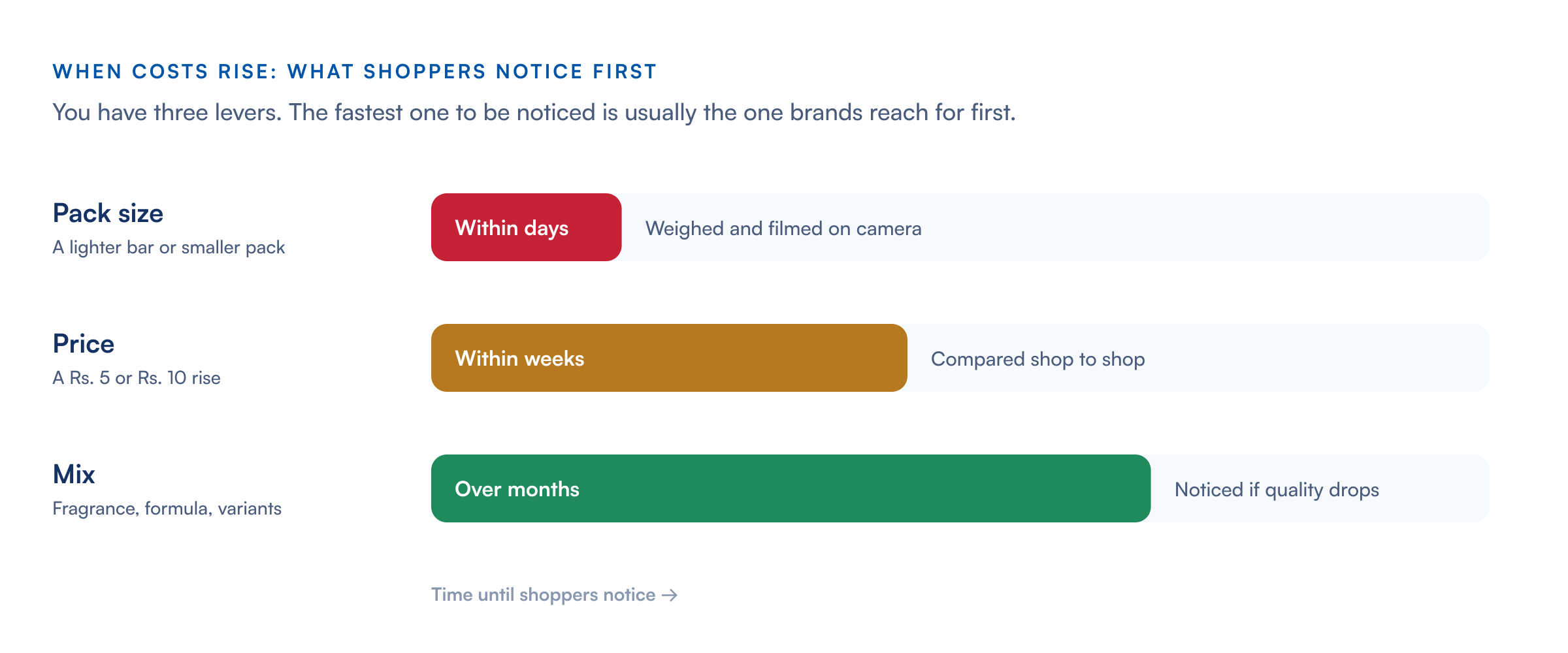
What to watch: pack and price talk in your category, and rivals’ pack changes. What to do: print the weight large on the front, keep one hero bar at an unchanged weight, and if a change is needed, announce it first, with the reason. In our illustrative example, the brand spots a rival’s 100 g bar quietly dropping to 90 g at the same price, two weeks before the first comparison videos appear.
2. Floods turn soap into relief
Floods come back every monsoon, somewhere on the island. When they do, households and relief groups need soap in bulk, fast, in specific districts.
Example from 2026: from mid-October, weather services warned of El Niño rain and flash floods. People posted the floods as they happened, a hill town under water, a bus wading through Kandy, and messages of “humanity is still alive” as neighbours helped each other.
What to watch: flood warnings and relief appeals by district. What to do: pre-pack relief bundles, agree routes with relief organisations before the rains peak, and show up with help, not with an advertisement.
3. The small-shop owner is the real gatekeeper
Small-shop owners decide whether your product is on the shelf, and they almost never post about it.
Example from 2026: when a new product launched in another everyday category, buyers found empty supermarket shelves, went to small shops that had never heard of it, and asked owners to keep a pack aside. Demand online did not mean stock on the shelf.
What to watch: mentions of your products by town, and posts about not finding them. What to do: use those signals to tell your sales team where to place stock and point-of-sale material first, and give shop owners a reason to stock before customers ask.
4. Festive moments are local, not national
Example from 2026: Tamil home cooks posted Deepavali sweet and biscuit recipes weeks before the festival. Deepavali morning traditionally begins with an oil bath, a natural moment for a soap brand in the North, East and estate areas. Generic festival greetings from brands, by contrast, got little attention.
What to watch: festival talk by region and language. What to do: run a specific, respectful, local moment, such as a Tamil-language Deepavali gift pack in the regions that celebrate it, with the price on the pack.
5. First-time buyers start at the hostel
Example from 2026: university students filmed boarding-room cooking on one electric cooker and judged every purchase by its price. Office workers posted about their daily routines.
What to watch: students’ and young workers’ talk about budgets and routines. What to do: students buying their own soap for the first time choose on price and habit; test a value multipack sold near universities at the start of each semester.
What people actually posted
Real Sri Lankan posts from 2026, translated where needed, with names and handles removed. The dates change; posts like these come back every year.
“Even if floods make life hard, humanity is still alive. Let’s all stand together.”
A creator, TikTok, Sinhala (translated), 1,733 engagements
“How the heavy rain left Akurana town under water.”
A local business page, Facebook reel, Sinhala (translated), 550 engagements
“Let’s get ready for a flood. The next few days are very dangerous.”
A news creator, TikTok, Sinhala (translated), 786 engagements
“There’s really no getting ahead for us, son.”
A tutor explaining VAT, TikTok, Sinhala (translated), 6,893 engagements
“Have you tried the newest doughnut? The price is too much. Remember the original price?”
A food vlogger on a supermarket price rise, TikTok, Sinhala (translated), 591 engagements
What a week can look like
In our illustrative example, the brand’s weekly briefing reads like this:
- Price: a rival’s 100 g bar is now 90 g at the same price in two supermarket chains. No shopper posts yet; expect comparison videos within two weeks.
- Place: flood warnings for three districts. Relief groups are posting appeals for hygiene supplies.
- Promotion: Deepavali is 15 days away. Tamil-language festive posts are rising in the North and East.
- Product: questions about “no added fragrance” and “sensitive skin” are rising in parent groups. Check the mild variant is in stock where they are asked.
Each line links to the posts, prices and news behind it, with how sure the system is. Your team decides.
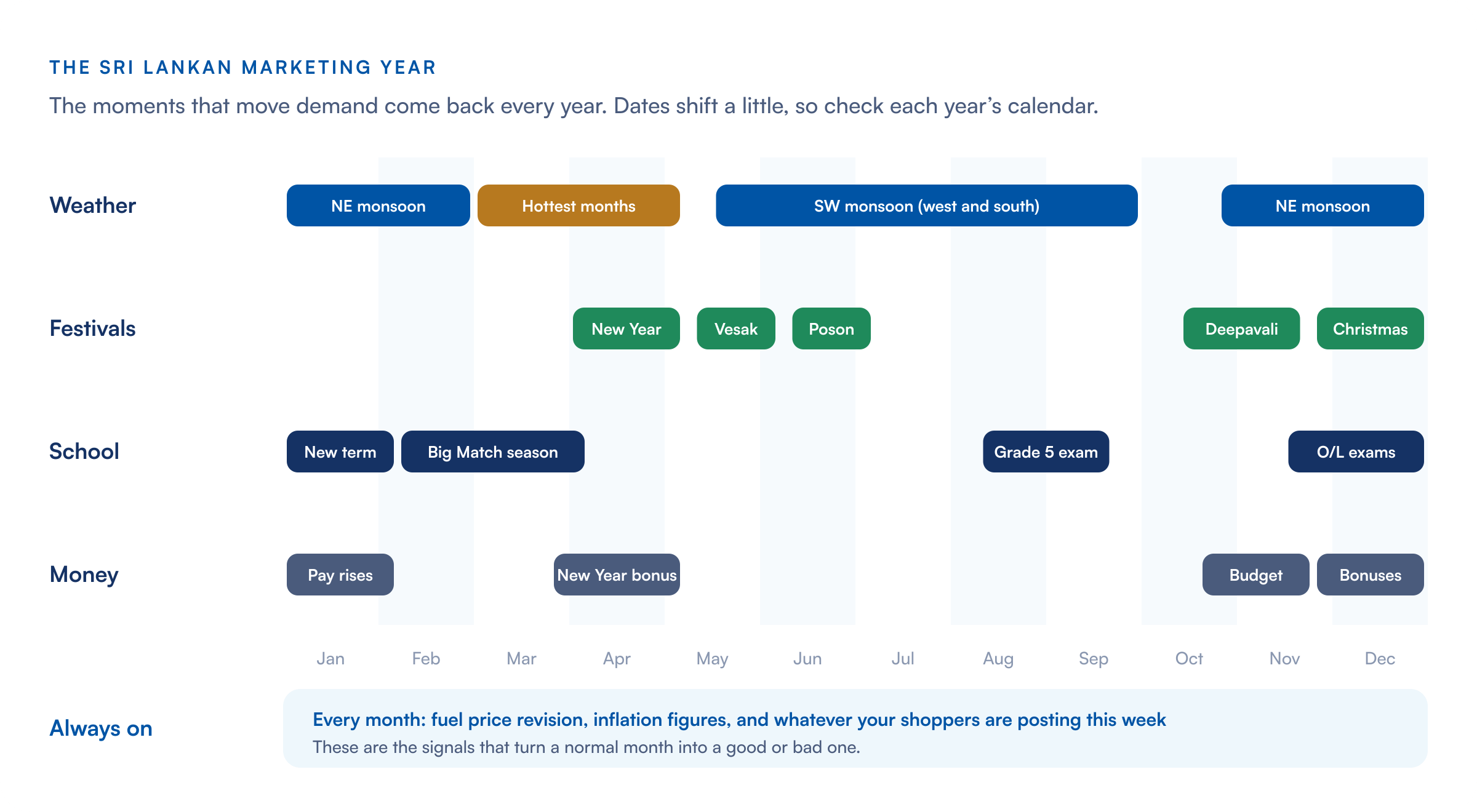
Your year at a glance
Why AI changes the job
A soap brand’s share is decided bar by bar, shop by shop, by people who rarely tell a researcher why they switched. They tell each other, online, in Sinhala, Tamil and English. Forevate reads those conversations alongside prices, weather, news and the calendar every day, tags each signal to product, price, place or promotion, and shows where your brand is about to win or lose a shelf, before the sales report does.
See what is moving your category. Start a free 30-day pilot, with first insights in 14 days. Related: how to explain a demand spike and how a beverage brand can win with AI.
Related resources
 Article
How a biscuit brand can win its market with AI
Launches that outrun the shelf, packs judged on camera, fans who out-market your campaigns: eight signals every biscuit brand faces, and how to act first.
 Article
How an automotive importer and distributor can lead its market with AI
Rivals, dealer pricing, loan rules, fuel prices and owner pride: eight signals every vehicle distributor faces, and how AI helps you act on them first.
 Article
Forevate vs market research: a partner, not a replacement
Forevate doesn't replace market research. It reads every signal between studies, makes each study go further, and helps you commission fewer, sharper ones.